In a new Muse.World feature following the Tokyo Design Awards recognition, Sophia Lampropoulou explores a central idea behind her work: an object is never complete on its own. Through movement, interaction and spatial awareness, design becomes an evolving experience rather than a static form.
Design Beyond Static Objects
The object is never complete on its own.
In her recent Muse.World feature, Sophia Lampropoulou reflects on how geometry, movement and perception influence the way objects are experienced. Rather than existing as fixed forms, her designs are intended to evolve through use and interaction.
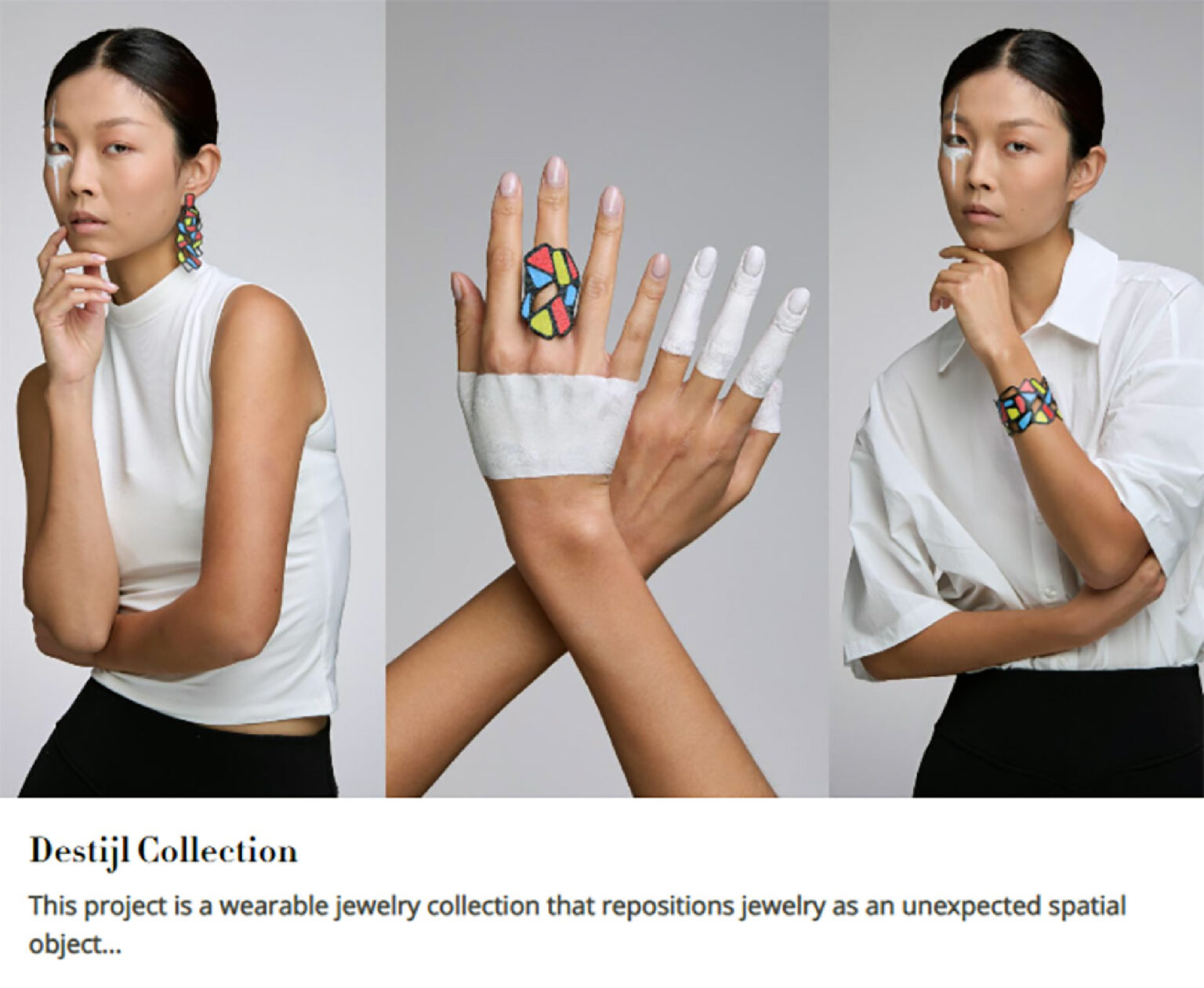
This approach is particularly evident in the award-winning Destijl Collection, where geometric forms respond to the body and create changing visual relationships through movement and wear.
Recognized through the Tokyo Design Awards, the Destijl Collection explores how structure, geometry and interaction can transform a wearable object into an active spatial experience.
Geometry, Movement and the Body
Rather than treating design as a static outcome, Sophia Lampropoulou approaches objects as systems that evolve through movement, perception and interaction. Her work explores how geometry can become an active part of human experience rather than a purely visual element.
This perspective is particularly visible in the Destijl Collection, where geometric forms are designed to change depending on how they are worn, viewed and experienced. The collection draws inspiration from structural clarity and spatial composition, transforming simple shapes into dynamic wearable objects.
Influenced by designers such as Gerrit Rietveld and Zaha Hadid, Lampropoulou examines how form can respond to the body and create new relationships between movement, space and perception.
Design as Experience
For Sophia Lampropoulou, design is not only about creating objects but about shaping experiences. Through geometry, movement and interaction, her work explores how products can become active participants in everyday life rather than static forms.
Whether through wearable collections, lighting objects or experimental product concepts, her approach combines digital fabrication, material exploration and human-centered thinking to create designs that evolve through use and perception.
“The body becomes part of the design process not only in terms of function but also in how form is perceived and activated.”
Read the full article on Muse.World.
Read the complete interview on Muse.World and discover the ideas behind the Destijl Collection and Sophia Lampropoulou’s approach to geometry, movement and interaction.